Schedule
Recurring or on demand
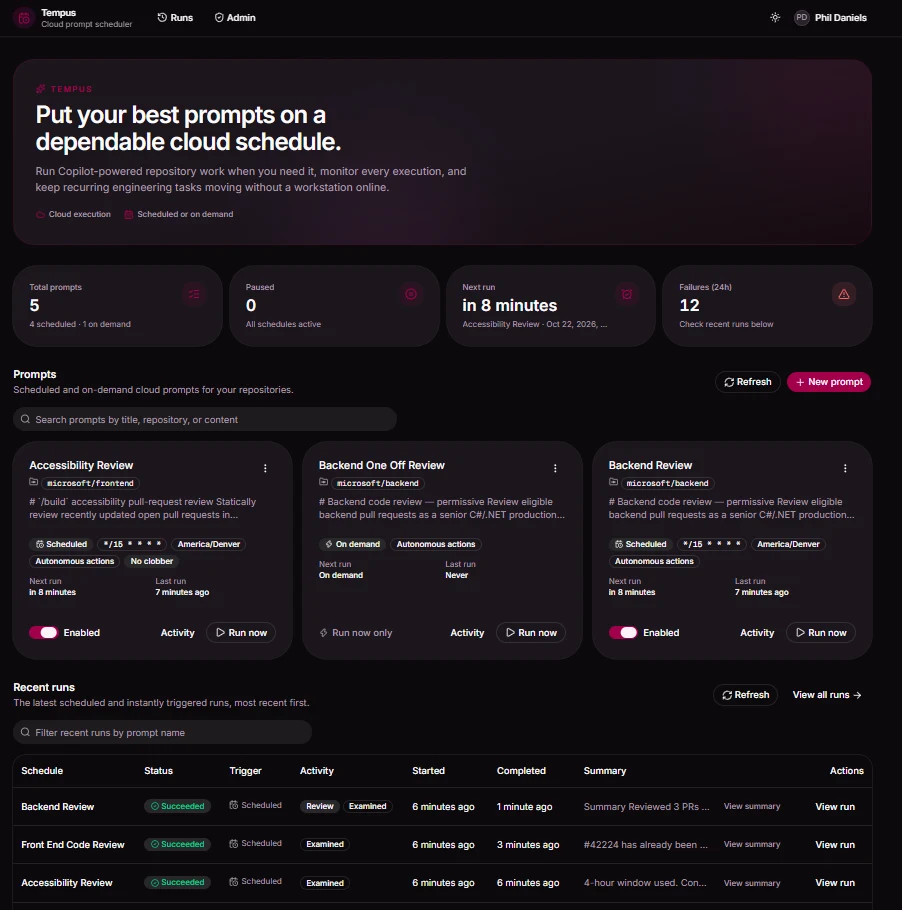
Configure repository prompts to run on a dependable cadence or trigger them immediately when engineering work needs attention.
Project showcase
Source privateA dependable cloud scheduler for recurring and on-demand Copilot-powered repository work, built at Microsoft with Next.js and the Copilot SDK.
The product
Tempus turns recurring repository work into a managed product experience. People can create scheduled or on-demand prompts, monitor execution, inspect results, and keep high-value engineering tasks moving without leaving a workstation online.
Capabilities
Schedule
Configure repository prompts to run on a dependable cadence or trigger them immediately when engineering work needs attention.
Observe
Track status, timing, activity, summaries, and repository interactions from a focused run detail experience.
Operate
Keep recurring Copilot workflows running remotely while providing clear controls for pausing, retrying, refreshing, and reviewing outcomes.
Run details
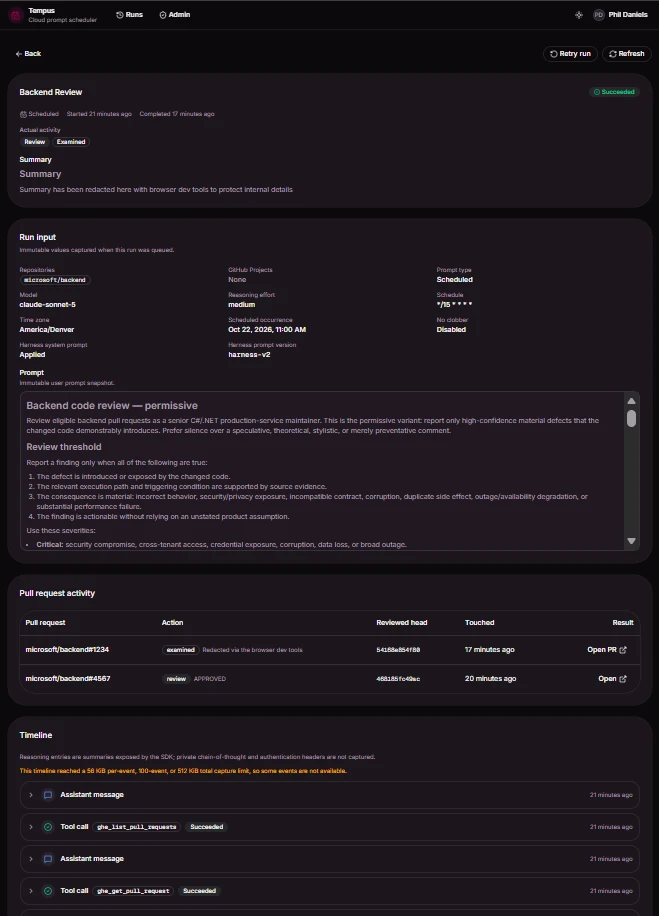
A run view brings configuration, repository activity, results, and the execution timeline together in one place. That makes scheduled automation easier to trust, troubleshoot, and review.
Screenshot disclosure
Sensitive data has been redacted for readers. Repository names, pull request numbers, commit-like identifiers, summaries, and other operational details shown here were replaced or rewritten for this public portfolio.
My contribution
End to end
Owned Tempus from initial product and system design through implementation, launch, feedback-driven iteration, and rollout.
250 engineers
Drove broad adoption across a large engineering organization of 250 people, making cloud-scheduled agent workflows part of everyday development work.
Engineering
A focused Next.js interface makes recurring automation approachable: search prompts, run work immediately, enable or pause schedules, retry executions, and move from a dashboard summary into detailed diagnostics without losing context.
Run inputs, prompt configuration, pull-request activity, tool calls, model settings, and execution timelines are collected into one debugging surface for understanding what an agent did and why.
Agent execution and activity are translated into understandable product interactions instead of exposing developers to raw infrastructure.
Status, summaries, repository activity, warnings, and timelines make background work inspectable and reduce the time needed to diagnose failed or unexpected runs.